Most people who want to keep a journal picture an hour-long ritual: a heavy notebook, a quiet morning, a cup of something warm. Then a normal Tuesday arrives, and the hour never shows up. The habit dies in its second week, not because it was a bad idea, but because it was built at the wrong size.
Ten minutes is not a watered-down version of journaling. It is roughly 150 to 300 words — enough to empty your head, notice what you actually think, and leave a mark you can return to. Done daily, that small page compounds. Done occasionally in long sittings, it rarely does.
What follows is a routine you can run tonight, plus the small decisions that keep it alive on the days when nothing goes to plan.
Set the physical details once, then stop deciding
Friction is what kills a daily habit, and most friction is tiny: a notebook that lives in a drawer upstairs, a pen that has run dry, a phone you have to unlock before you can choose the right app. Spend fifteen minutes once, on a day when you are not journaling, solving all of it.
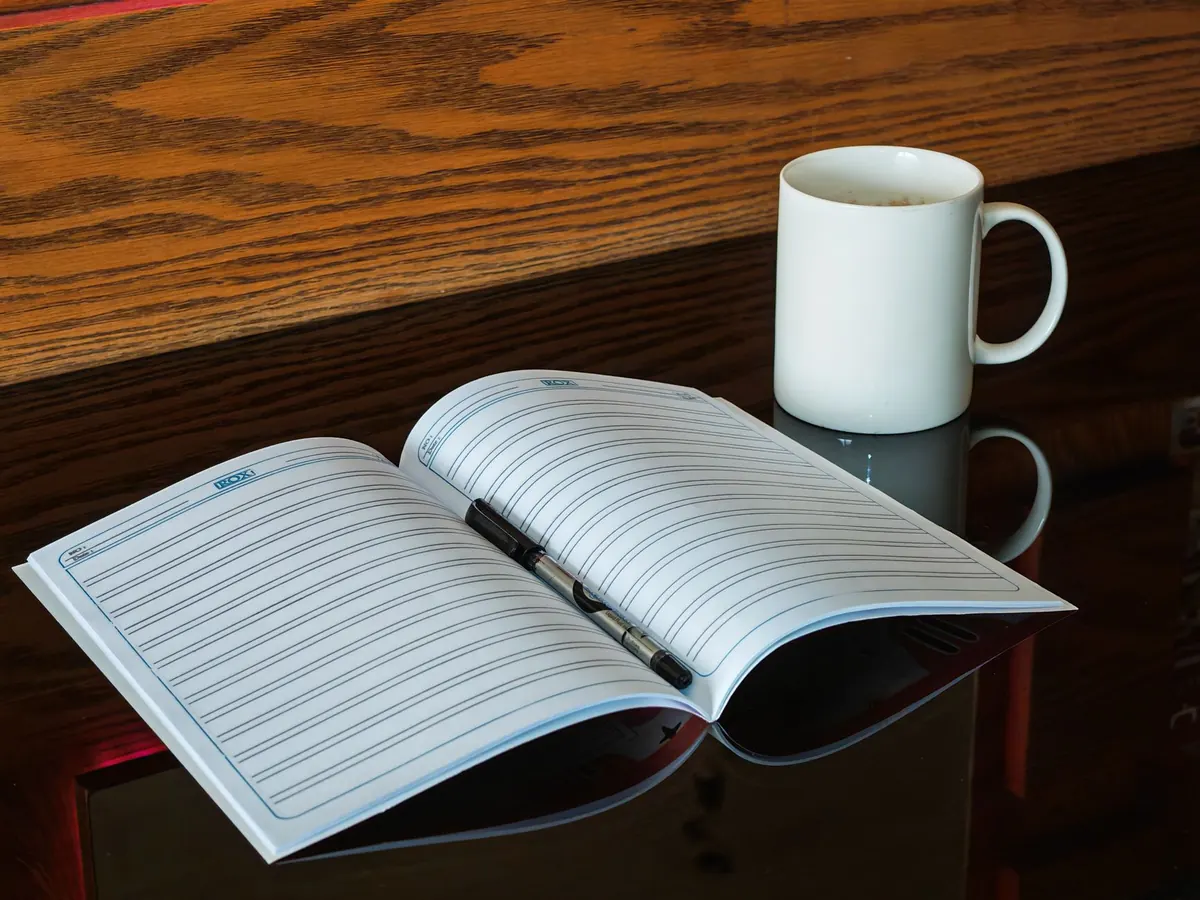
- One notebook. Any notebook. A cheap lined one beats an expensive one you are afraid to spoil.
- One pen, attached. Clip it to the cover or tape it inside. A pen you have to hunt for is a reason not to start.
- One place. A specific chair, the kitchen table, the driver's seat before you walk into work. Choose a spot that already exists in your day.
- One anchor. Attach the writing to something you already do: the first coffee, the last light off, the moment after you park. The existing habit becomes the reminder.
If you prefer typing, the same logic applies: one document, one app, one shortcut on your home screen. What you are removing is not paper but the small negotiation with yourself about where to write and what in. Settle it once.
What ten minutes actually looks like
Ten minutes is shorter than it sounds. Here is a shape that uses all of it and asks nothing more.
- Minute 1: arrive. Date the page. Note the time, the place, and one word for your mood. That is three lines, and the entry has already begun.
- Minutes 2 to 4: empty the top of your head. Write whatever is loudest — the email you are dreading, the thing your friend said, the fact that you slept badly. Do not organize it and do not make it sound good. This part is a drain, not a draft.
- Minutes 5 to 8: answer one question. Pick a single prompt and answer it in a short paragraph. One question, not five.
- Minutes 9 to 10: close the loop. Write one sentence about tomorrow, or one thing from today worth remembering. Then close the notebook. That closing line is what makes an entry feel finished rather than abandoned.
Notice what is missing: no rereading, no crossing out, no summarizing your week. If you finish early, stop early. Ten minutes is a ceiling, not a quota.
Mini prompts for the days when nothing comes
A prompt is a way to skip the blank-page pause. Keep three or four favorites within reach and rotate them; you do not need a library.
For the first minutes of the day
- What is the one thing today that would make it feel decent?
- What am I carrying from yesterday that I could put down?
- What do I already know about today that I am pretending not to?
For the last minutes of the day
- What did I notice today that I would otherwise forget by Friday?
- Where did I spend energy that gave nothing back?
- Who did I talk to, and what stayed with me?
When nothing comes at all
- Describe the last hour in plain facts. This almost always turns into something.
- Finish this sentence: "Right now I am pretending that..."
- Write down three things you can see, two you can hear, one you can smell.
If a prompt gives you two sentences and then nothing, that is fine. Two sentences is an entry.
Lower the bar until skipping feels silly
The habit survives on your worst days, not your best ones. So define an entry so small you can write it while the kettle boils: the date plus one sentence. That counts as complete. Anything above it is a bonus.
Two things follow from this. First, stop measuring streaks in a way that one missed day can erase — aim for most days, not every day. Second, do not reread and grade your entries during the first month. That month is for showing up. Judging the writing is a reason to quit dressed up as an editorial standard.
Staying consistent when the week gets tight
There will be weeks when ten minutes is genuinely ten minutes you do not have. These moves keep the thread intact.
- Use the three-minute version. Three bullets: what happened, what I felt, what I will do. Done.
- Write before the phone. If you journal in the morning, do it before you unlock anything. A screen full of other people's urgency is hard to put down.
- Keep the notebook where the dead time is. The car, the bag you take to work, the kitchen counter. Write in the queue, in the parked car, in the four minutes before a meeting.
- Say the sentence out loud first. If your hands are busy — walking, washing up — say one line to yourself and write it down later. The sentence survives.
Missed days, bad entries, and other non-problems
A missed day is not a broken habit. A missed week that you decide "doesn't count" is. When you skip, skip cleanly: date the page, write "gap of four days," and carry on. Do not catch up, and do not fill pages with apologies to yourself.
Bad entries deserve a mention too, because they are what scare beginners off. The boring entry, the whining entry, the one that reads like a list of complaints — those are the honest ones, and they are the reason the practice works. You are not producing a document for an audience. You are leaving a trail.
Write tonight, then write tomorrow
Put the notebook on the table now with the pen clipped to it. Before bed, write the date, one word for the day, and a single sentence about what you would like tomorrow to look like. That is the first entry finished, and it took four minutes.
Tomorrow, do the same thing in the same place at the same time. Repeat for two weeks before you change anything — not the notebook, not the hour, not the prompts. By then the ten minutes will have stopped feeling like a task and started feeling like the part of the day when you find out what you think.
Photo: 6689062 / Pixabay