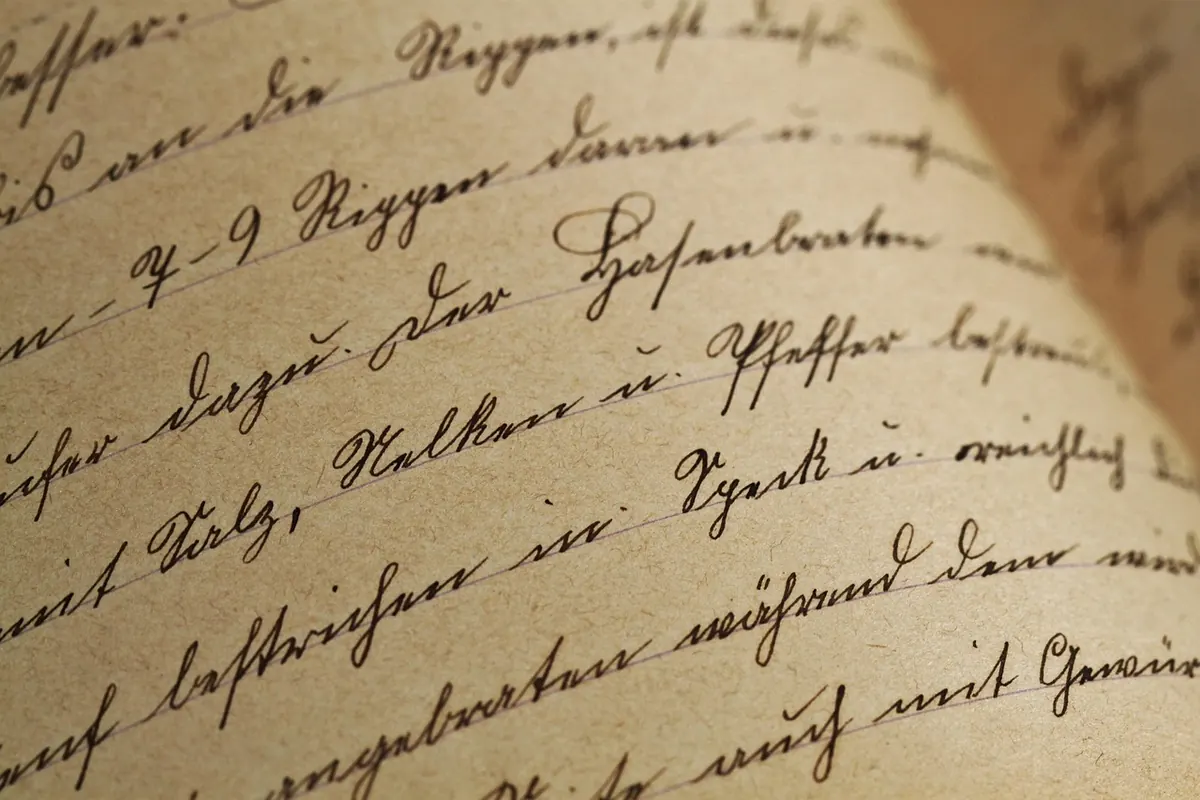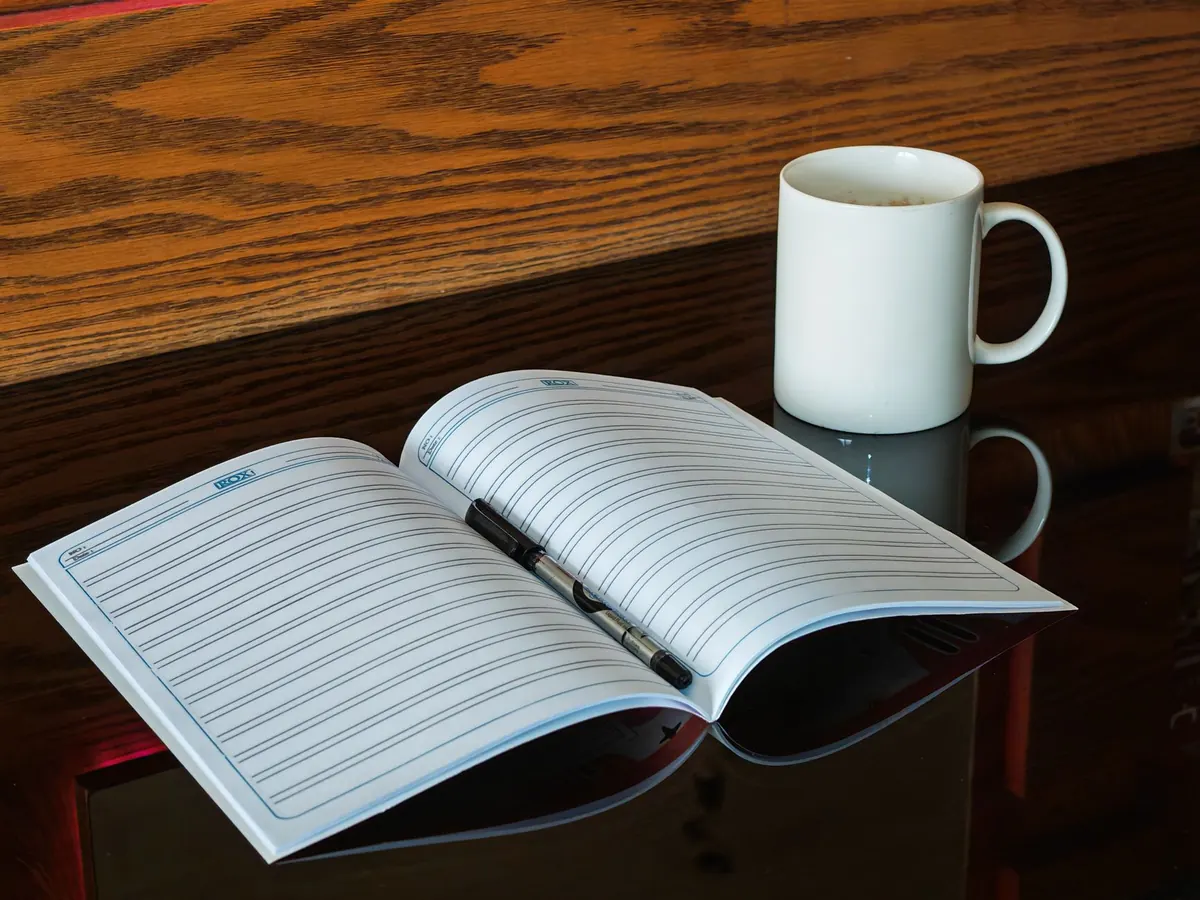
Two people sit down at the same kitchen table at ten o'clock at night. Both open a notebook. Both write for fifteen minutes. One would call what she is doing a diary; the other would insist it is a journal, and neither of them is wrong. The words overlap so comfortably that most of us use them interchangeably, until the moment we sit down to choose one for ourselves and realise we are not entirely sure what we are choosing. Nobody is policing the distinction. It is a difference in emphasis, and once you can see it clearly, picking a practice becomes much easier.
The short answer
A diary tends to be a record of days. A journal tends to be a record of thinking. Both words come from the same Latin root for "day" (dies), which is exactly why the confusion has lasted for centuries, but modern usage has pulled them apart. A diary keeps time; a journal keeps a thread.
- Diary: dated entries in sequence, written close to the events they describe, usually for the writer alone.
- Journal: entries organised around a question, a project, a mood or a practice, and often written to find out what you think.
- Diary: assumes a future reader, even if that reader is only you at seventy.
- Journal: assumes a present purpose, which may be clarity, calm, or getting a decision out of your head and onto paper.
Everything else is detail. And the details are where the useful decisions live.
Purpose: recording a life vs. thinking on paper
Picture the same event written two ways. A storm brought down the pear tree next door at four in the morning.
A diary entry might read: "Storm at 4am. Pear tree down across the fence, half the power out until noon. Neighbour in the garden in her dressing gown. Pasta for dinner because nothing else was possible."
A journal entry might read: "The pear tree fell and I have been in a strange mood all day. It occurs to me that I have been waiting for something to fall over for weeks, and now that something has, I feel less relieved than I expected."
Neither is better. But notice what each one is doing. The diary is capturing a day so it can be retrieved later; it is a small act of preservation, and it does the job in three sentences. The journal is using the day as material for thinking. It asks something of the writer.
Tone and voice
Diaries are allowed to be boring, and this is their great advantage. Shorthand, names without introductions, sentences that trail off, a line that says only "nothing happened." Because the diary's job is coverage rather than insight, a dull entry is not a failure. It is Tuesday.
Journals usually push toward reflection. The voice is more essayistic, more questioning, sometimes more polished, sometimes deliberately messy in the way that unedited thought is messy. A journal entry can end with a question and stay unanswered for a month.
These are tendencies, not laws. Plenty of diaries are deeply reflective, and plenty of journals are flat records of what happened. If you find yourself writing a dated entry and then, underneath it, three sentences about why the day unsettled you, you are not breaking a rule. You are hybridising, which is what most experienced keepers eventually do.
Privacy: the locked drawer and the open page
The question of who might read the page shapes what goes on it. A diary carries an implicit promise of privacy, and that promise is what allows the unflattering, petty, frightened material to surface. A journal is more often shared by excerpt, quoted in a workshop, brought to a session with a counsellor, or handed to a friend who asks how the writing is going.
Decide your reader before page one, because it changes everything downstream. A few practical ways to protect the practice:
- Write the rule on the inside cover: "Private" or "Shareable" or "Ask me first." It saves arguments and hesitation.
- If you want to write honestly about other people, use initials or first names only, and assume they might read it someday. Say less about them and more about you.
- Keep the physical book somewhere you would not be embarrassed to have it found, rather than relying on nobody ever looking.
- If you write digitally, check where the file syncs and who else has access to the account before you trust it with the difficult entries.
One sensible note: writing is a good companion through a hard stretch, but it is not a substitute for support from a professional when things are genuinely heavy. The page can hold a great deal; it cannot answer back.
Format and rhythm
Diaries suit a fixed rhythm: one dated page a day, or one line, or five minutes before bed. Printed dates help, because a blank day is a visible gap and the structure does part of the work for you. Journals are more elastic. You might write four times in a week and then not touch the book for a fortnight, because you only open it when there is something to work out.
If you are choosing a format, work in this order:
- Pick the frequency you can honestly sustain, not the one you admire. Three times a week beats daily-and-abandoned.
- Let the book match the frequency. Dated pages for a daily habit; undated pages for an occasional one, so you are not staring at empty Tuesdays.
- Decide whether you want to write by hand or type. Handwriting slows you down, which helps reflection; typing keeps up with your thoughts, which helps volume.
- Keep the pen or the file where you will trip over it. Friction, not motivation, decides whether this survives week three.
Which one should you keep?
Choose a diary if
You want a memory aid, a family record, or proof that the year happened. You like short entries and a clear finish line. You are comforted rather than constrained by a date at the top of the page, and you would rather write three plain sentences every night than a long, searching page once a month.
Choose a journal if
You are trying to think, decide, or make something. You want a place to test an argument, plan a move, keep a reading log, track a project, or sort through a feeling without an audience. You do not mind uneven gaps and you would find a dated page slightly oppressive.
Or keep both, imperfectly
Many people end up with a dated entry for the day and a few reflective lines underneath it. That is a diary with a journal habit bolted on, and it works. The categories are tools for choosing, not a licence exam.
How to start this week
Take one notebook you already own. For seven nights, write the date and two sentences about the day, then one line answering: "What am I actually thinking about?" That single question is the hinge between the two forms, and after a week you will know which half you reached for first. If the facts felt like a chore and the question felt like relief, you are a journal keeper. If the reverse, buy a diary with printed dates and stop apologising for writing short entries.
Then keep going for a month before you buy anything else. The practice you will actually maintain is the only one worth choosing, and it is usually the plainer of the two.
Photo: Designecologist / Pexels